- Tracheostomy
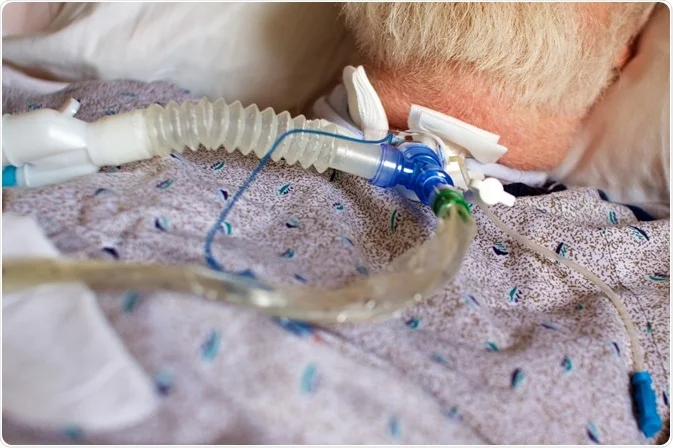
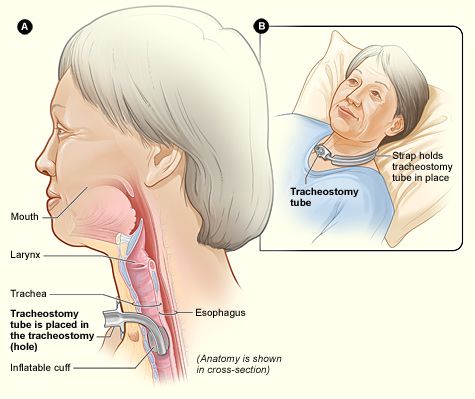
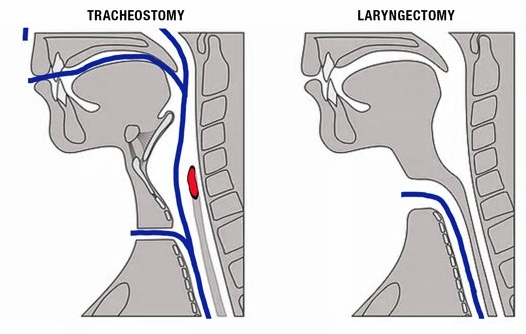
- A surgical airway created through the front of the neck into the trachea, leaving the larynx and upper airway connection intact so the tube serves as a secondary route for air.
- Tracheotomy
- The surgical procedure of cutting an opening into the trachea, typically performed between the second and third tracheal rings.
- Laryngectomy
- Surgical removal of the larynx, with the trachea permanently redirected to a neck opening, leaving no anatomical connection between the mouth and lungs.
- Stoma
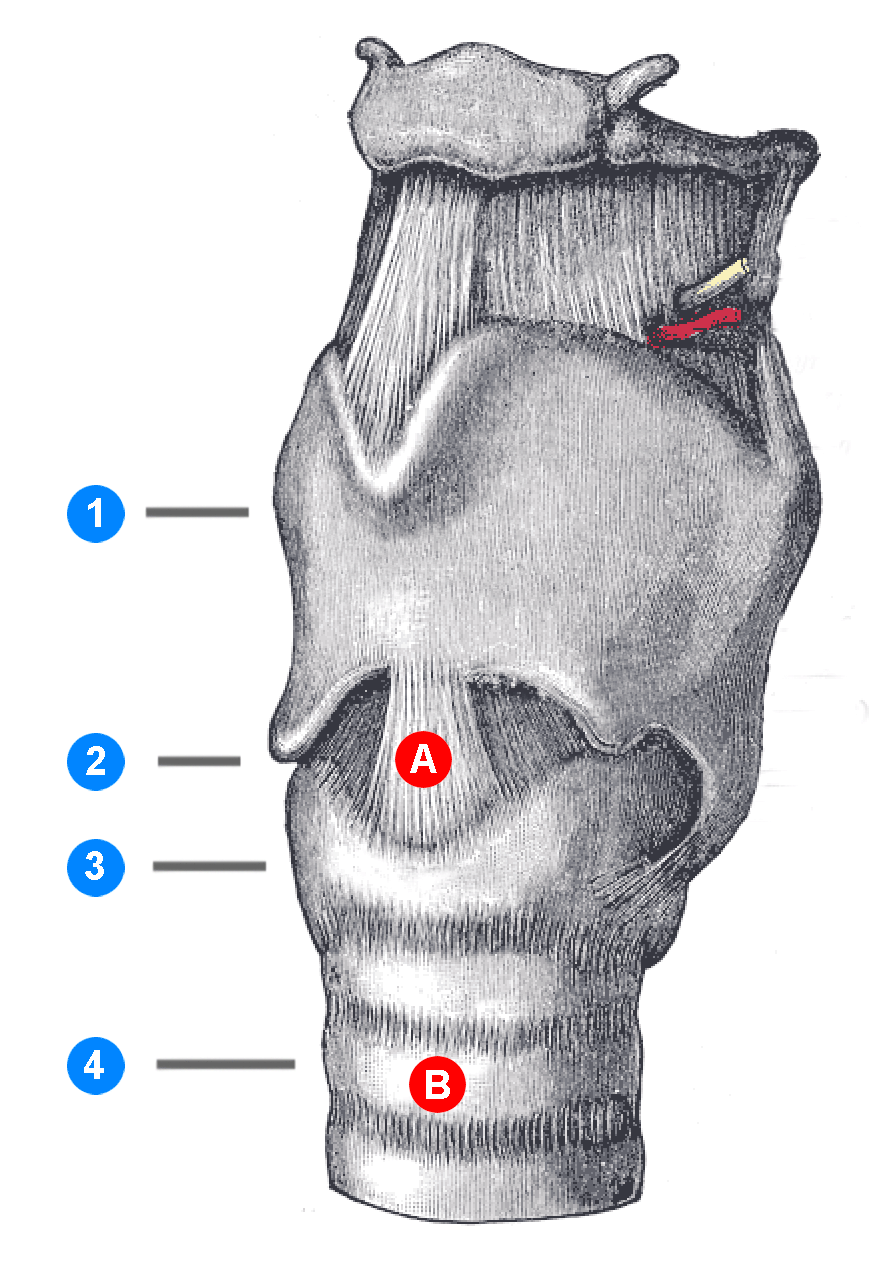
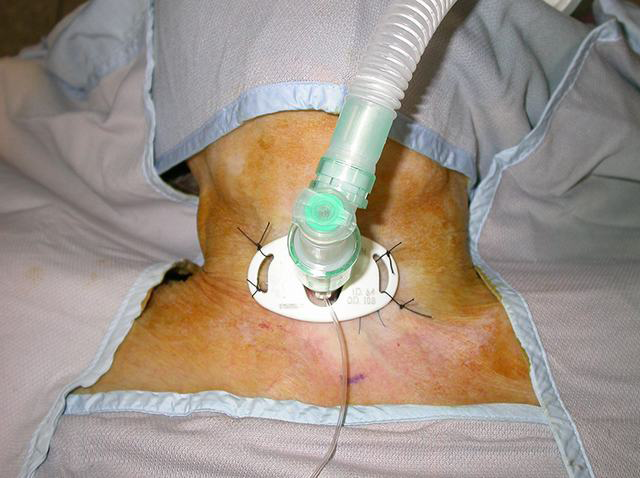
- The surgical opening in the neck through which the tracheostomy tube is placed, located about 1 to 2 cm below the cricoid cartilage.
- Trachea
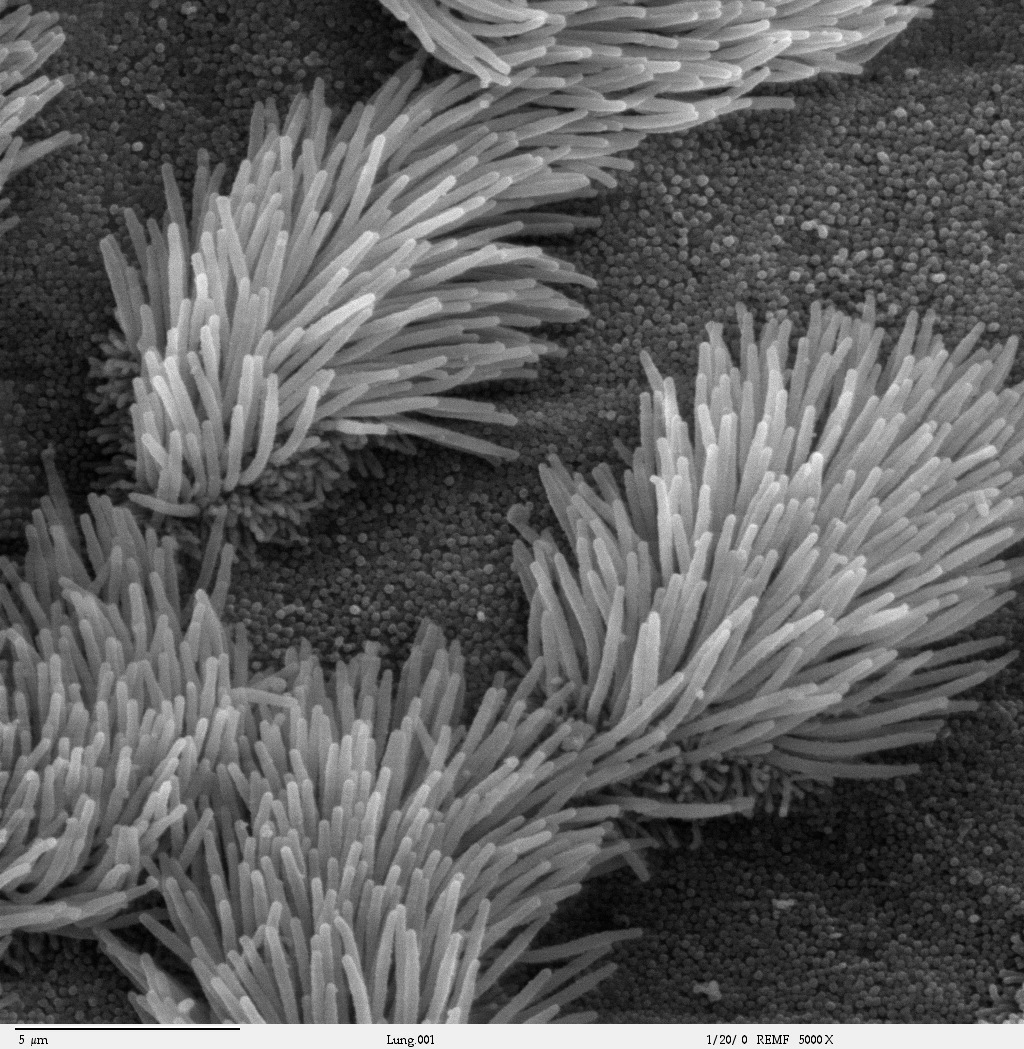
- The windpipe, lined with ciliated respiratory epithelium that moves mucus and debris up out of the lungs.
- Larynx
- The voice box, containing the vocal cords, which sits above the tracheostomy site and remains intact in a tracheostomy but is removed in a laryngectomy.
- Cilia
- Microscopic hairs lining the trachea that sweep mucus and debris upward as part of airway defense.
- Mucociliary escalator
- The coordinated upward movement of cilia that carries mucus and debris out of the lower airway, dependent on warm and moist air to function.
- Heat-Moisture Exchanger (HME)
- A "false nose" device that traps heat and moisture from exhaled breath to condition the next inhaled breath, replaced every 24 hours or sooner if soiled.
- Thyroid cartilage
- The most prominent anterior neck landmark, sitting just above the cricothyroid ligament.
- Cricothyroid ligament
- The membrane between the thyroid and cricoid cartilages, the site of an emergency cricothyrotomy.
- Cricoid cartilage
- The only complete tracheal ring and a primary surgical landmark for tracheostomy placement.
- Cricothyrotomy
- An emergency surgical airway placed through the cricothyroid ligament, distinct from a tracheotomy site.
- Innominate artery
- A large vessel sitting just anterior or lateral to the stoma, capable of catastrophic erosion into the trachea.
- Thyroid isthmus
- The bridge of thyroid tissue near the stoma that must be considered during site assessment.
- Outer cannula
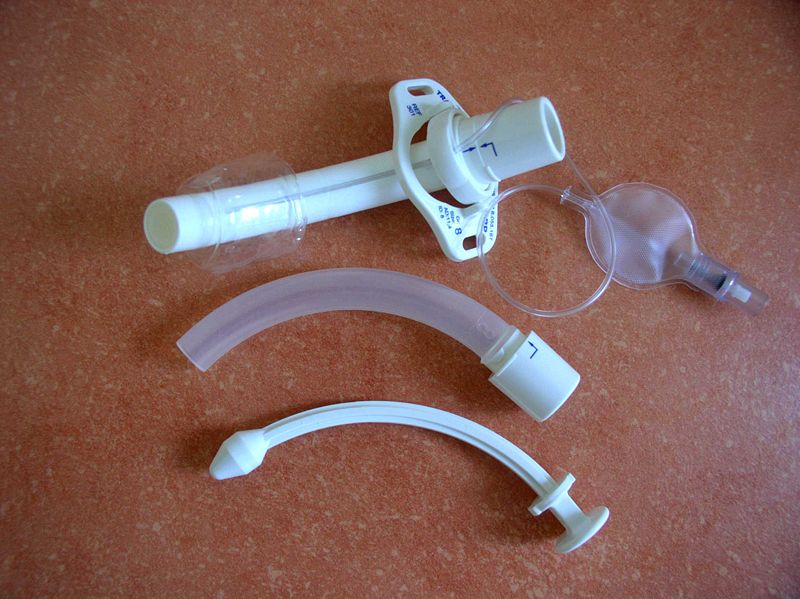
- The permanent shaft of the tracheostomy tube that stays in place to keep the airway open.
- Inner cannula
- The removable liner inside the outer cannula that can be taken out to clear mucus plugs without disturbing the main tube.
- Obturator
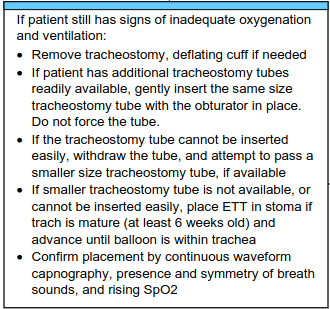
- A blunt, solid insertion guide used only when first placing the tube; must be removed immediately after placement so the patient can breathe.
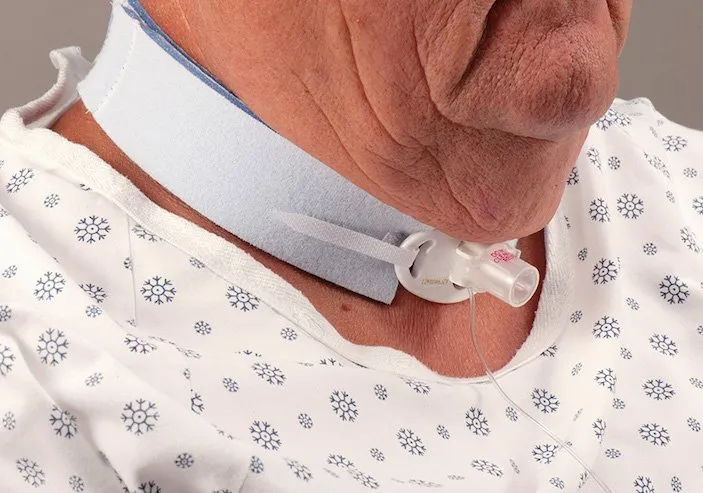
- Flange
- The faceplate that sits against the patient's neck and lists manufacturer, size, and cuff status.
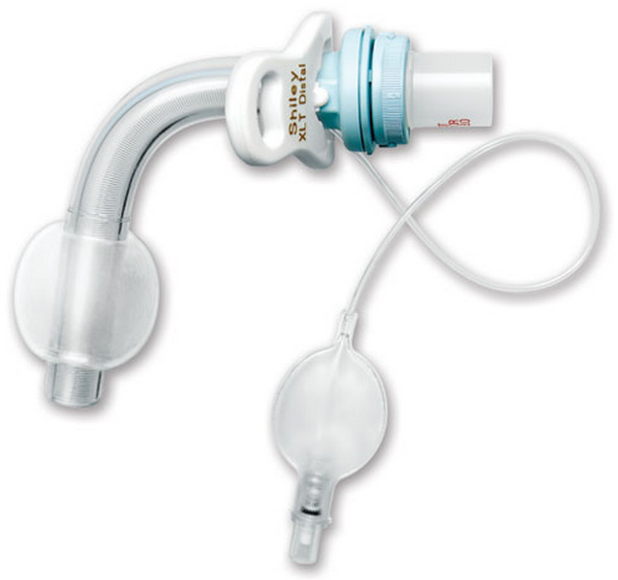
- Cuff
- An inflatable balloon at the distal end of the tube that seals against the tracheal wall.
- Cuffed tube
- A tracheostomy tube with an inflatable cuff, required for positive pressure ventilation and to reduce aspiration risk.
- Uncuffed tube
- A tracheostomy tube without a cuff, used in patients ready for decannulation or those who can protect their own airway.
- Foam cuff
- A self-inflating cuff made of expanding foam rather than air, such as the Bivona Fome-Cuf; speaking valves should never be used with these.
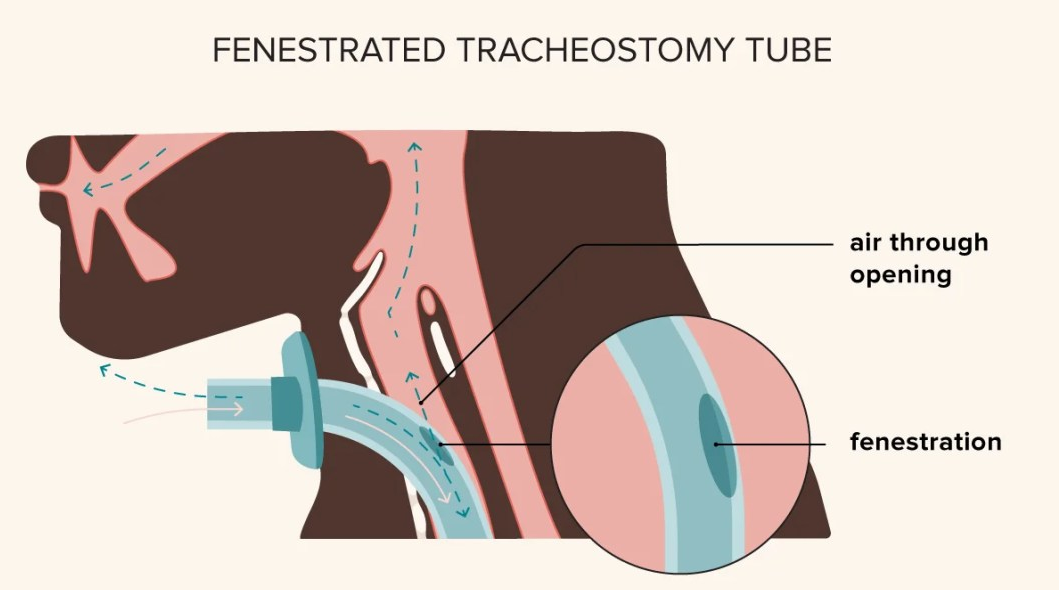
- Fenestrated tube
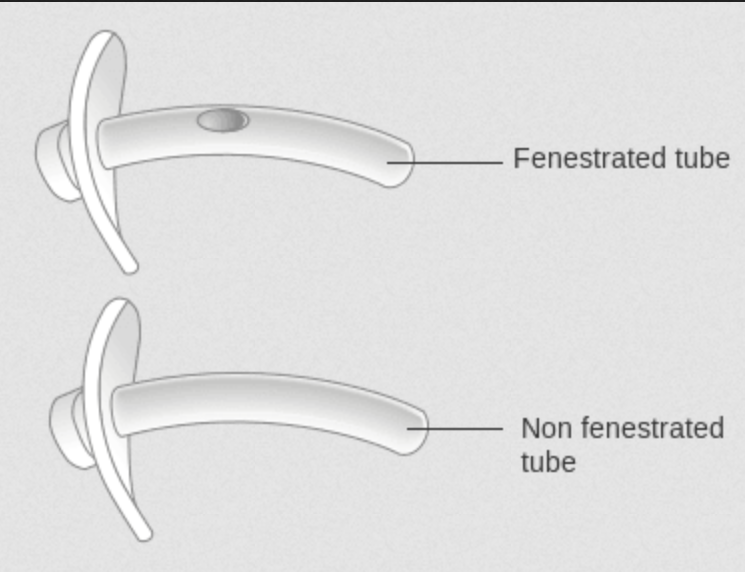
- A tracheostomy tube with one or more openings in the posterior outer cannula that allow exhaled air to pass up through the larynx for speech and reduce work of breathing during weaning.
- Non-fenestrated tube
- A standard solid-walled tracheostomy tube that creates a closed system for effective positive pressure ventilation and safer suctioning.
- Shiley
- A common rigid PVC tracheostomy tube manufactured by Medtronic, often using disposable inner cannulas.
- Portex
- A tracheostomy tube brand featuring color-coded hubs for rapid size identification.
- Bivona
- A soft silicone tracheostomy tube made by Smiths Medical, known for its Tight-to-Shaft cuff design.
- Disposable Inner Cannula (DIC)
- A single-use inner cannula that is replaced rather than cleaned, common with Shiley tubes.
- Tight-to-Shaft (TTS) cuff
- A cuff design that collapses completely flat against the tube when deflated, allowing easier insertion and removal.
- Inner Diameter (ID)
- The internal measurement of the tube that determines airflow and compatible equipment sizes.
- Outer Diameter (OD)
- The external measurement of the tube that determines how much space it occupies within the trachea.
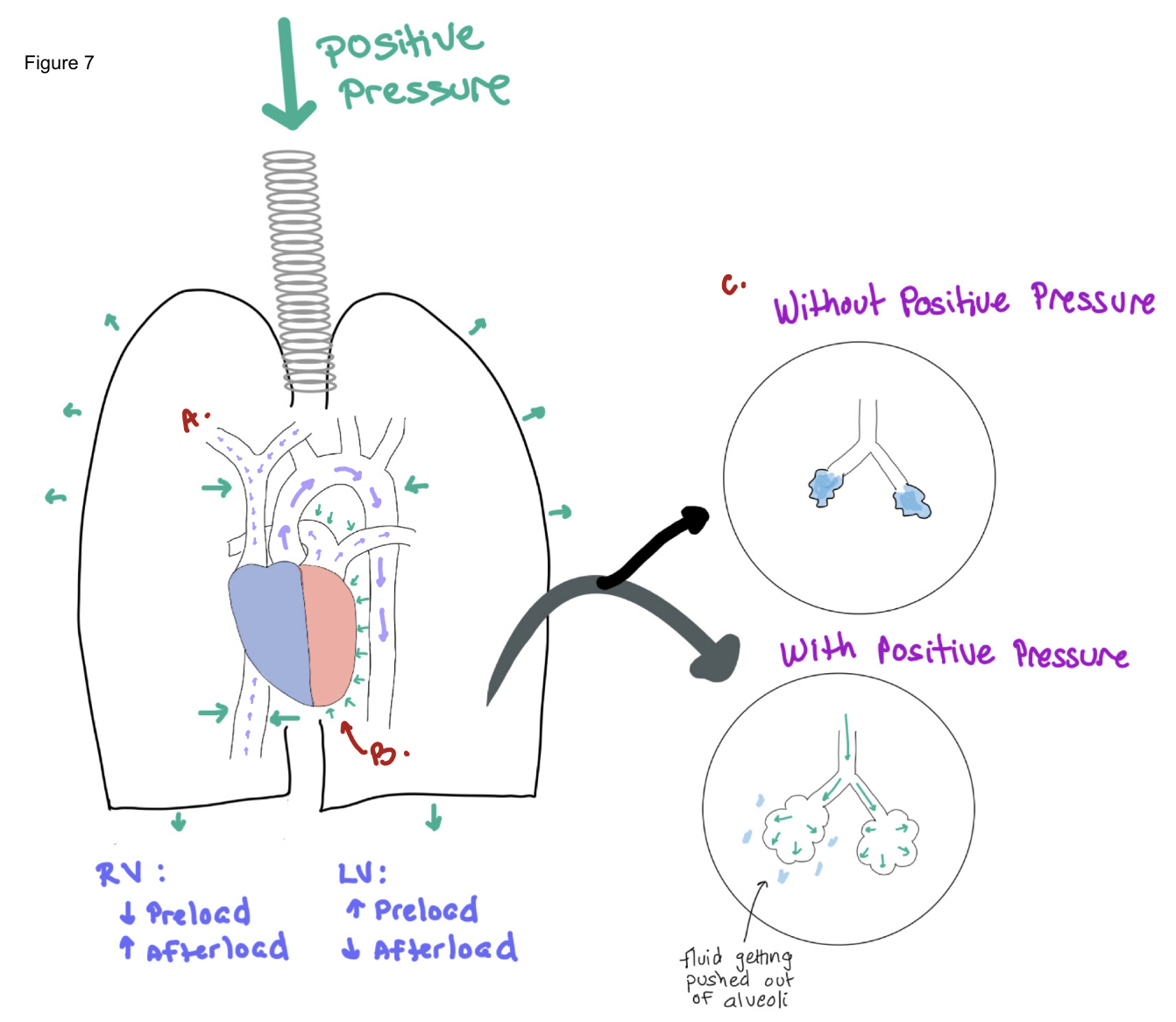
- Positive Pressure Ventilation (PPV)
- Ventilation that pushes air into the lungs, requiring a closed system such as a cuffed or non-fenestrated tube.
- Aspiration
- The entry of saliva, secretions, or stomach contents into the lower airway, reduced by an inflated cuff.
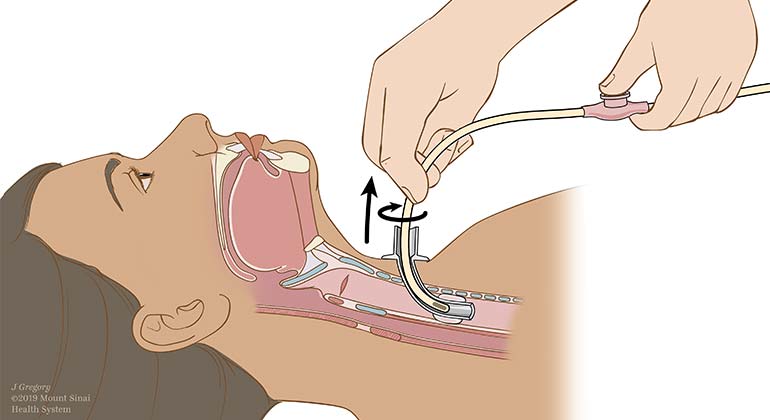
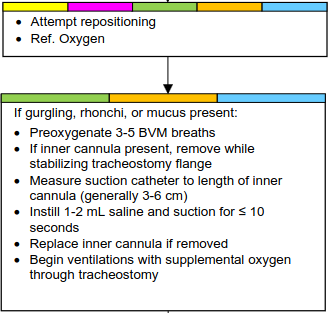
- Suctioning
- Manual clearance of secretions through the tube, performed only on withdrawal at less than 100 mmHg, with a twirling motion, for no more than 10 seconds.
- Granulation tissue
- Scar tissue that can grow into fenestration openings, causing bleeding or obstruction during tube changes.
- Tracheal ischemia
- Loss of blood flow to the tracheal wall caused by cuff pressures over 30 cm H2O.
- Tracheal stenosis
- Permanent scarring and narrowing of the trachea resulting from prolonged ischemic injury.
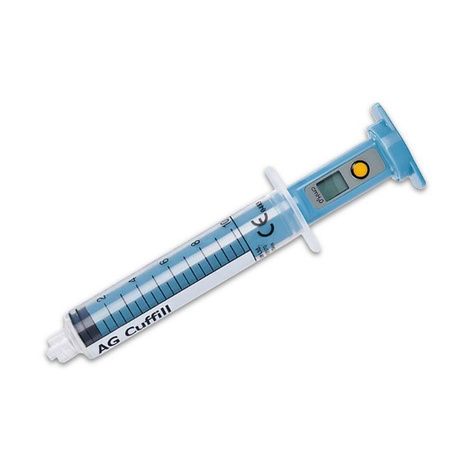
- Manometer
- A device used to accurately measure cuff pressure, with a target range of 20 to 30 cm H2O.
- Pilot balloon
- The small external balloon connected to the cuff that gives a tactile indication of inflation status.
- Decannulation
- Removal of the tracheostomy tube, either planned during weaning or accidental.
- Tracheo-innominate Artery Fistula
- A rare and catastrophic erosion of the innominate artery into the tracheal wall causing massive hemorrhage.
- Sentinel bleed
- A minor stomal bleed that may resolve on its own but warns of impending massive hemorrhage from a tracheo-innominate fistula.
- Utley Maneuver
- An emergency technique where the tube is removed, a finger is inserted into the stoma, and the innominate artery is compressed anteriorly against the sternum to control bleeding.
- Tamponade
- Compression of a bleeding vessel to stop hemorrhage, achieved at the trach by overinflating the cuff with 20 to 50 mL of air.
- Preload
- The volume of blood returning to the right side of the heart, supported by negative pressure during spontaneous breathing and reduced by aggressive positive pressure ventilation.
- Afterload
- The resistance the heart must pump against, also influenced by changes in intrathoracic pressure.
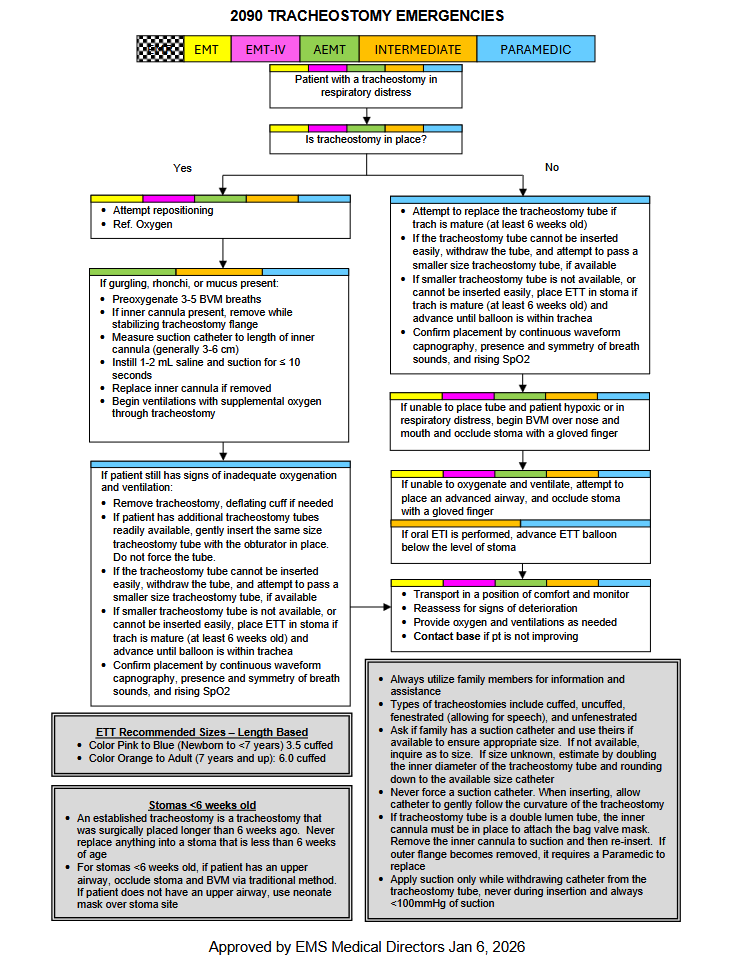
- Established tracheostomy
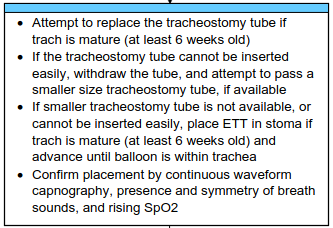
- A stoma that was surgically placed more than six weeks ago, with a healed and stable tissue track.
- False passage
- A non-anatomical track created when a tube is forced into the soft tissue of the neck rather than the trachea, a major risk in immature stomas.
- Total neck breather
- A laryngectomy patient whose only airway is the stoma, with no connection between the mouth and lungs.
- Valsalva maneuver
- Forced exhalation against a closed glottis to build intrathoracic pressure, impossible to perform with a tracheostomy because the vocal cords are bypassed.
- Speaking valve
- A one-way valve attached to the tube that allows inhalation through the trach and exhalation up through the vocal cords for speech; never used with foam cuff tubes.
- Waveform capnography
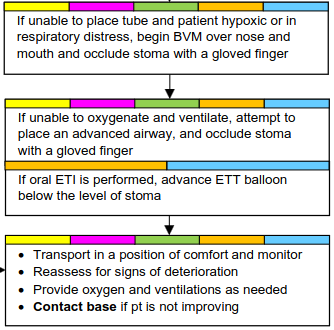
- Continuous measurement of exhaled CO2 used to confirm tube placement after insertion or replacement.
- Bag-Valve Mask (BVM)
- A manual ventilation device used over the mouth and nose, or over the stoma with a pediatric or neonate mask, depending on patient anatomy.