- Conducting Zone
- The air passageways that warm, filter, and humidify air on its way to the lungs, extending from the nose through the terminal bronchioles; does not participate in gas exchange
- Respiratory Zone
- The region where oxygen and carbon dioxide exchange occurs, beginning at the respiratory bronchioles and including alveolar ducts, alveolar sacs, and alveoli
- Gas Exchange
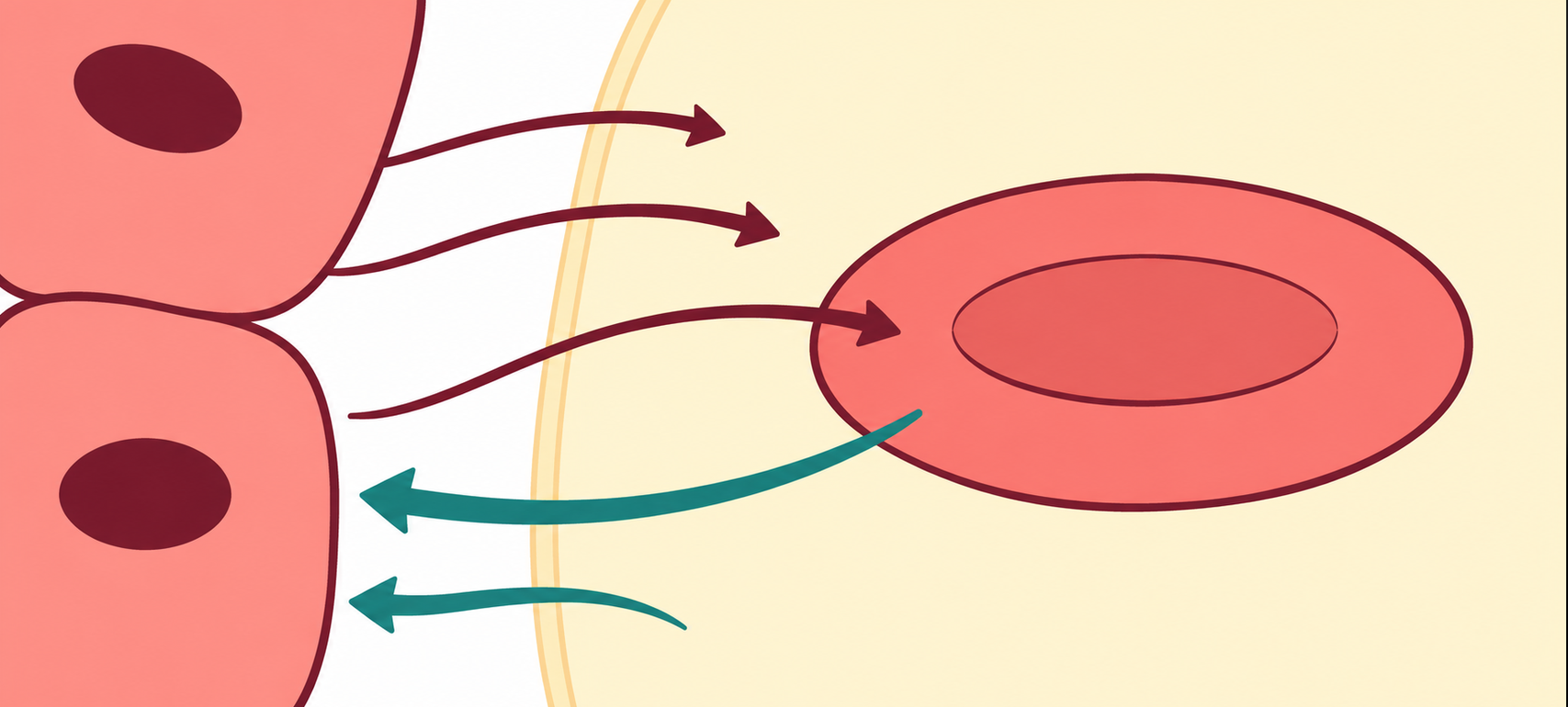
- The delivery of oxygen to the blood and the removal of carbon dioxide from the blood
- Acid-Base Balance
- Regulation of blood pH by controlling carbon dioxide levels through changes in ventilation rate
- Olfaction
- The sense of smell, mediated by specialized receptors in the superior nasal cavity
- Blood Reservoir
- The volume of blood held in the pulmonary circulation that can be mobilized when the body needs it
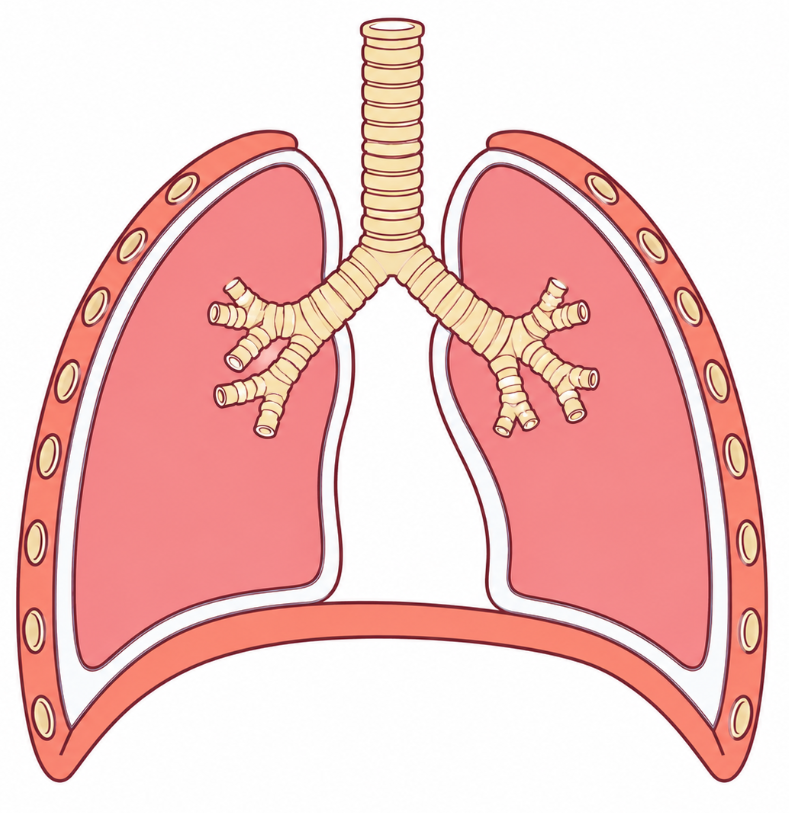
- Mediastinum
- The central compartment of the thoracic cavity between the lungs, containing the heart, great vessels, esophagus, and other structures
- Hilum
- The opening on the medial surface of each lung where the main bronchus, blood vessels, and nerves enter and exit
- Costal Surface
- The large, convex lateral surface of the lung that presses against the rib cage
- Mediastinal Surface
- The medial surface of the lung facing the heart, containing the hilum
- Cardiac Notch
- The indentation on the mediastinal surface of the left lung that accommodates the heart
- Lingula
- A tongue-like projection of the left upper lobe below the cardiac notch, considered the anatomical equivalent of the right middle lobe
- Horizontal Fissure
- The fissure of the right lung that separates the upper lobe from the middle lobe
- Oblique Fissure
- The fissure that separates the middle lobe from the lower lobe on the right, and the upper lobe from the lower lobe on the left
- Bronchopulmonary Segment
- A distinct region of lung tissue supplied by its own segmental bronchus and artery, making it a surgically resectable unit
- Pulmonary Lobule
- The smallest structural unit of the lung visible to the naked eye, roughly pyramidal and supplied by a single terminal bronchiole
- Acinus
- The functional gas-exchanging unit of the lung, consisting of all airways and alveoli supplied by a single terminal bronchiole
- Interlobular Septa
- Thin walls of connective tissue that partially separate adjacent lobules and contain lymphatic vessels and veins
- Pulmonary Circulation
- The primary blood supply to the lungs, carrying deoxygenated blood from the right ventricle to the alveolar capillaries for gas exchange
- Pulmonary Trunk
- The vessel emerging from the right ventricle that divides into the right and left pulmonary arteries
- Pulmonary Arteries
- Vessels that carry deoxygenated blood from the right ventricle to the lungs, unusual because they follow the branching of the bronchial tree
- Pulmonary Capillaries
- The dense capillary network surrounding each alveolus where gas exchange takes place
- Pulmonary Veins
- The four veins (two from each lung) that return oxygenated blood to the left atrium
- Bronchial Circulation
- A separate systemic supply that delivers oxygenated blood to lung tissues themselves, including airways, vessels, nerves, and visceral pleura
- Bronchial Arteries
- Small arteries arising from the descending aorta at the T5 to T6 level that supply the supporting structures of the lungs
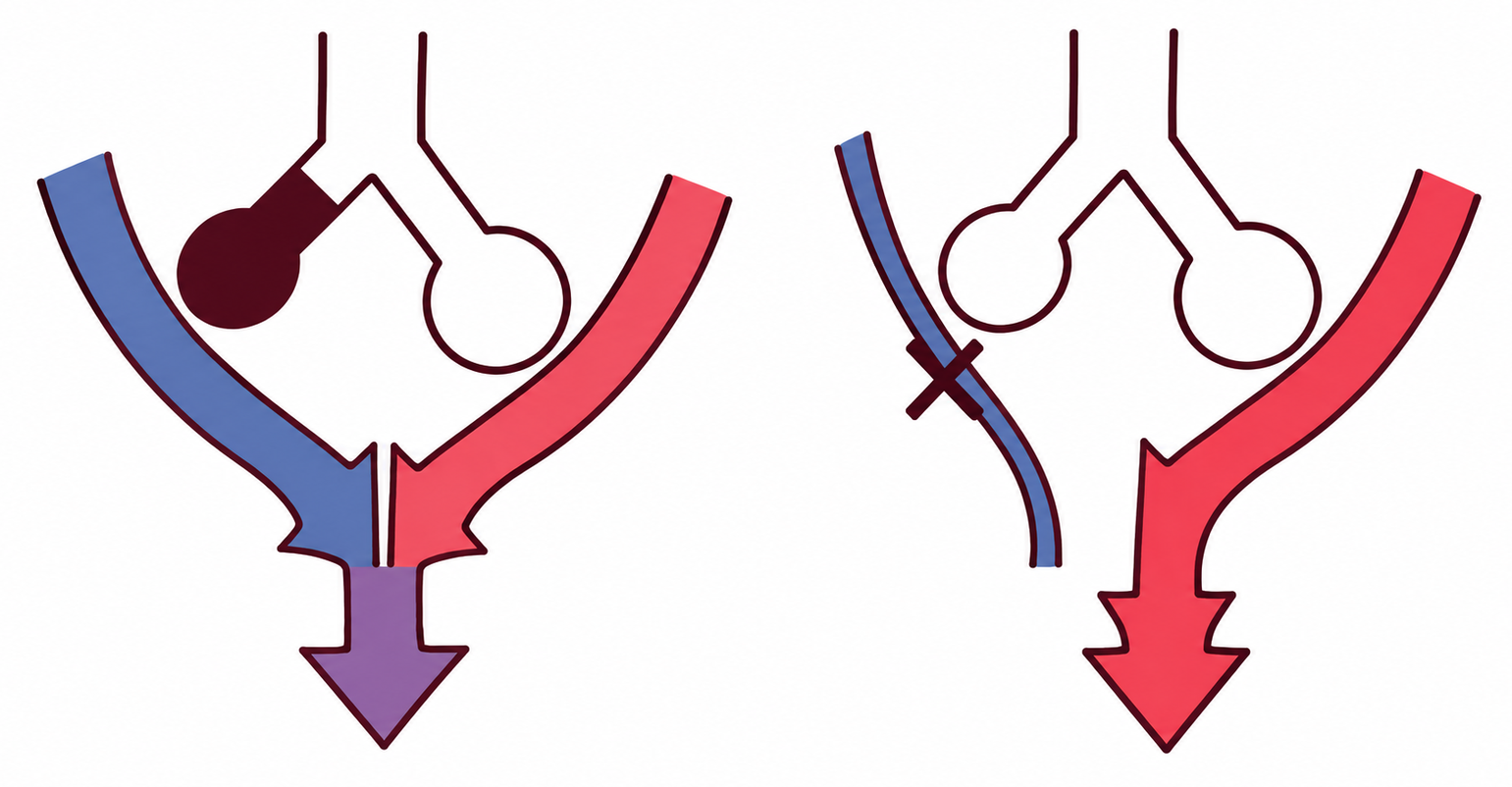
- Physiologic Shunt
- The small amount of deoxygenated blood that mixes with oxygenated blood, slightly reducing the oxygen content of systemic arterial blood
- Respiratory Membrane
- The thin barrier between alveolar air and capillary blood, only 0.5 to 1.0 micrometers thick, across which gases diffuse
- Pleura
- The double-layered serous membrane enclosing each lung and forming a sealed compartment essential to breathing mechanics
- Visceral Pleura
- The inner pleural layer that adheres directly to the lung surface and lacks pain receptors
- Parietal Pleura
- The outer pleural layer lining the thoracic wall, diaphragm, and mediastinum, richly supplied with pain receptors
- Pleural Cavity
- The potential space between the visceral and parietal pleura, containing a thin film of pleural fluid and negative pressure
- Pleural Fluid
- The 10 to 20 milliliters of fluid in the pleural cavity that reduces friction and creates cohesion between the pleural layers
- Costodiaphragmatic Recess
- The deepest part of the pleural cavity, where costal pleura meets diaphragmatic pleura and pleural fluid accumulates preferentially
- Costomediastinal Recess
- The angle where costal pleura meets mediastinal pleura along the anterior chest wall
- Pneumothorax
- Air entering the pleural space, which eliminates negative pressure and allows the lung to collapse from its elastic recoil
- Pleural Effusion
- Excess fluid accumulation in the pleural cavity that can cause lung collapse and respiratory distress
- Nares
- The two external openings of the nose, also called the nostrils, that allow air entry
- Nasal Cavity
- The space divided into right and left sides by the nasal septum that warms, filters, and humidifies incoming air
- Nasal Septum
- The midline partition of bone and cartilage that separates the two nasal cavities
- Nasal Conchae
- Three curved, shelf-like projections (superior, middle, inferior) that increase surface area and create turbulent airflow; also called turbinates
- Cilia
- Tiny hair-like structures that beat in coordinated waves to move mucus and trapped debris toward the pharynx
- Olfactory Epithelium
- Specialized tissue in the superior nasal cavity containing receptors that detect odors
- Paranasal Sinuses
- Air-filled spaces within the frontal, maxillary, sphenoid, and ethmoid bones that warm and humidify air and lighten the skull
- Respiratory Epithelium
- Pseudostratified ciliated columnar epithelium lining the airways, containing goblet cells and cilia
- Goblet Cells
- Specialized cells of the respiratory epithelium that produce mucus to trap particles and pathogens
- Pharynx
- The muscular tube, roughly 13 centimeters long, that serves as a shared passageway for air and food
- Nasopharynx
- The uppermost pharyngeal region behind the nasal cavity, functioning only as an air passage and containing the adenoids and Eustachian tube openings
- Oropharynx
- The middle pharyngeal region from the soft palate to the hyoid bone, serving as a passage for both air and food
- Laryngopharynx
- The lowest pharyngeal region from the hyoid bone to the esophagus, where the airway and food passages divide
- Larynx
- The voice box, a cartilaginous passageway connecting the pharynx to the trachea that provides an open airway, routes air and food, and produces voice
- Thyroid Cartilage
- The largest laryngeal cartilage, forming the laryngeal prominence or Adam's apple
- Cricoid Cartilage
- The only complete ring of cartilage in the airway, sitting below the thyroid cartilage and serving as a landmark for cricothyrotomy
- Epiglottis
- The leaf-shaped elastic cartilage that folds over the laryngeal opening during swallowing to prevent aspiration
- True Vocal Cords
- Paired bands of connective tissue covered by mucous membrane that vibrate to produce sound
- False Vocal Cords
- The vestibular folds superior to the true vocal cords that help close the glottis during swallowing and breath-holding
- Glottis
- The opening between the vocal cords, which is the narrowest part of the adult airway
- Trachea
- The windpipe, a tubular passageway about 10 to 12 centimeters long that extends from the cricoid cartilage to the carina
- Carina
- The point where the trachea divides into the right and left main bronchi, containing sensitive receptors that trigger the cough reflex
- Hyaline Cartilage
- The 16 to 20 C-shaped rings that support the trachea and keep it open, incomplete posteriorly to allow esophageal expansion
- Trachealis Muscle
- The smooth muscle in the posterior tracheal wall that narrows the trachea during coughing to increase expelled air velocity
- Mucociliary Escalator
- The system of cilia and mucus that continuously moves trapped particles upward toward the pharynx at 1 to 2 centimeters per minute
- Bronchial Tree
- The branching network of airways within the lungs, continuing through roughly 23 generations of progressively smaller passages
- Right Main Bronchus
- The shorter, wider, more vertical primary bronchus that runs at about a 25-degree angle, making aspiration more likely on the right
- Left Main Bronchus
- The longer, narrower primary bronchus that angles more horizontally at about 45 degrees
- Lobar Bronchi
- The secondary bronchi supplying each lobe, with three on the right and two on the left
- Segmental Bronchi
- The tertiary bronchi that each supply a bronchopulmonary segment, roughly 10 per lung
- Bronchioles
- Airways less than 1 millimeter in diameter that lack cartilage and rely on elastic tissue and surrounding lung to stay open
- Terminal Bronchioles
- The smallest conducting airways, less than 0.5 millimeters in diameter, marking the end of the conducting zone
- Respiratory Bronchioles
- Transitional airways with scattered alveoli budding from their walls that function in both air conduction and gas exchange
- Alveolar Ducts
- Airways completely lined with alveoli that branch from respiratory bronchioles
- Alveolar Sacs
- Clusters of alveoli, resembling bunches of grapes, at the ends of alveolar ducts
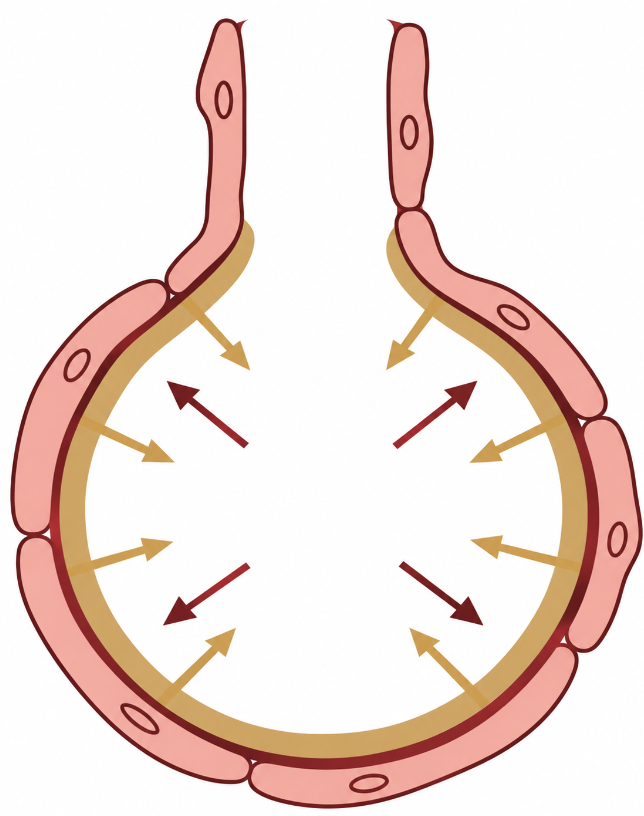
- Alveoli
- Tiny thin-walled air sacs, roughly 300 million in adult lungs, that form the primary gas exchange surface of about 70 square meters
- Interalveolar Septa
- The shared walls between adjacent alveoli that contain the capillary networks and elastic fibers
- Pores of Kohn
- Small openings between adjacent alveoli that allow collateral ventilation, help prevent atelectasis, and let macrophages move between alveoli
- Type I Pneumocytes
- Extremely thin, flat cells covering about 95 percent of the alveolar surface that form the gas exchange barrier and cannot divide
- Type II Pneumocytes
- Cuboidal cells that produce surfactant and can divide into Type I cells to repair damaged alveolar epithelium
- Surfactant
- A lipoprotein mixture produced by Type II pneumocytes that reduces alveolar surface tension, preventing collapse and improving compliance
- Alveolar Macrophages
- Immune cells, also called dust cells, that patrol alveolar surfaces and engulf bacteria, particles, and debris
- Respiratory Distress Syndrome
- A newborn condition caused by insufficient surfactant, most common in premature infants, in which alveoli collapse with each breath
- Acute Respiratory Distress Syndrome
- A condition in which damage to Type I pneumocytes allows fluid to leak into the alveoli and severely impair gas exchange
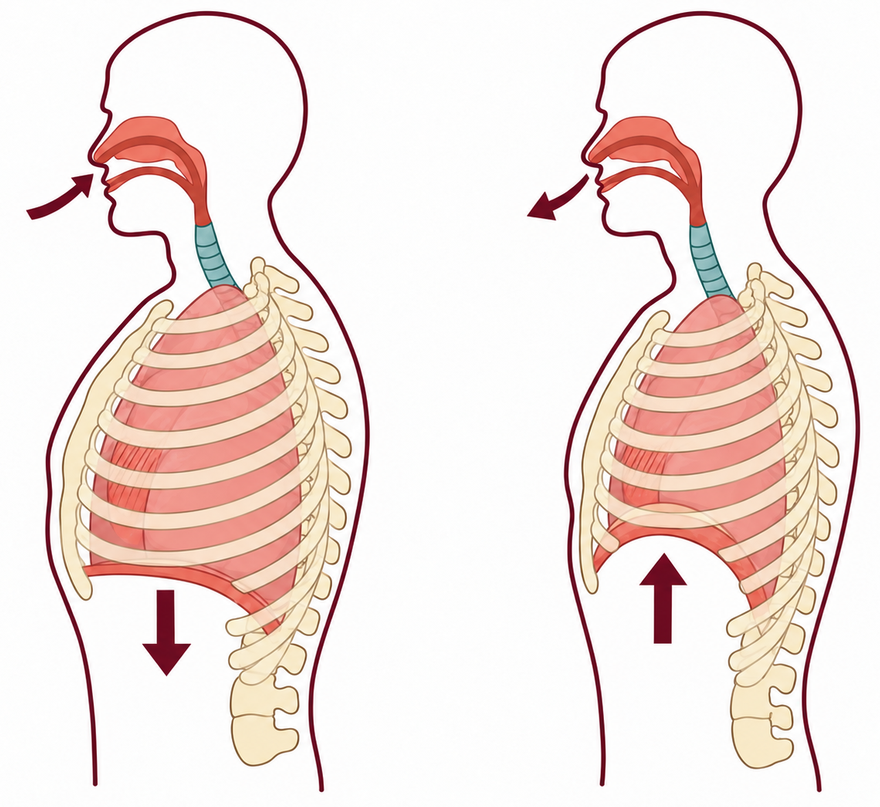
- Ventilation
- The mechanical movement of air into and out of the lungs, assessed by chest rise, respiratory rate, and breath sounds
- Oxygenation
- The loading of oxygen onto hemoglobin and its delivery to tissues, assessed by pulse oximetry and arterial blood gas
- Pulmonary Ventilation
- The movement of air into and out of the lungs to maintain gas exchange
- External Respiration
- Gas exchange between the alveoli and the blood in the pulmonary capillaries
- Internal Respiration
- Gas exchange between the systemic capillaries and the tissues, along with cellular use of oxygen
- Perfusion
- The flow of blood through the pulmonary capillaries, dependent on cardiac output and pulmonary blood pressure
- Eupnea
- Normal, quiet breathing at rest
- Hyperpnea
- Increased rate or depth of breathing during activity
- Diaphragmatic Breathing
- Breathing driven primarily by movement of the diaphragm
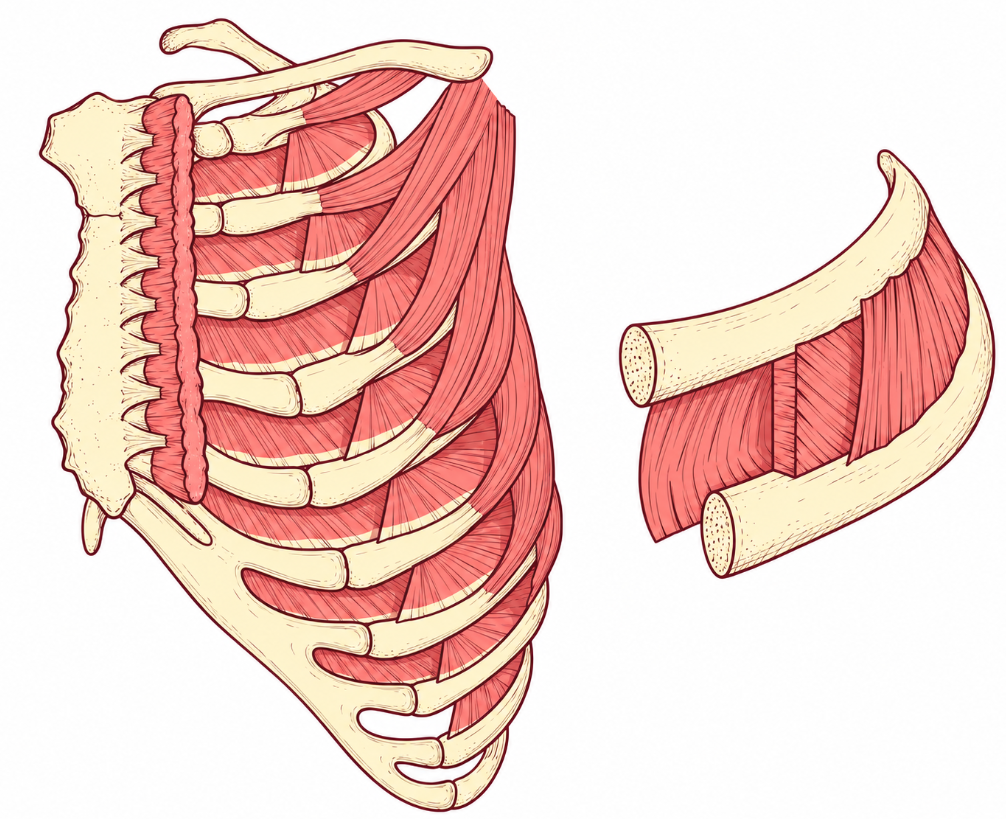
- Costal Breathing
- Shallow breathing produced by movement of the rib cage
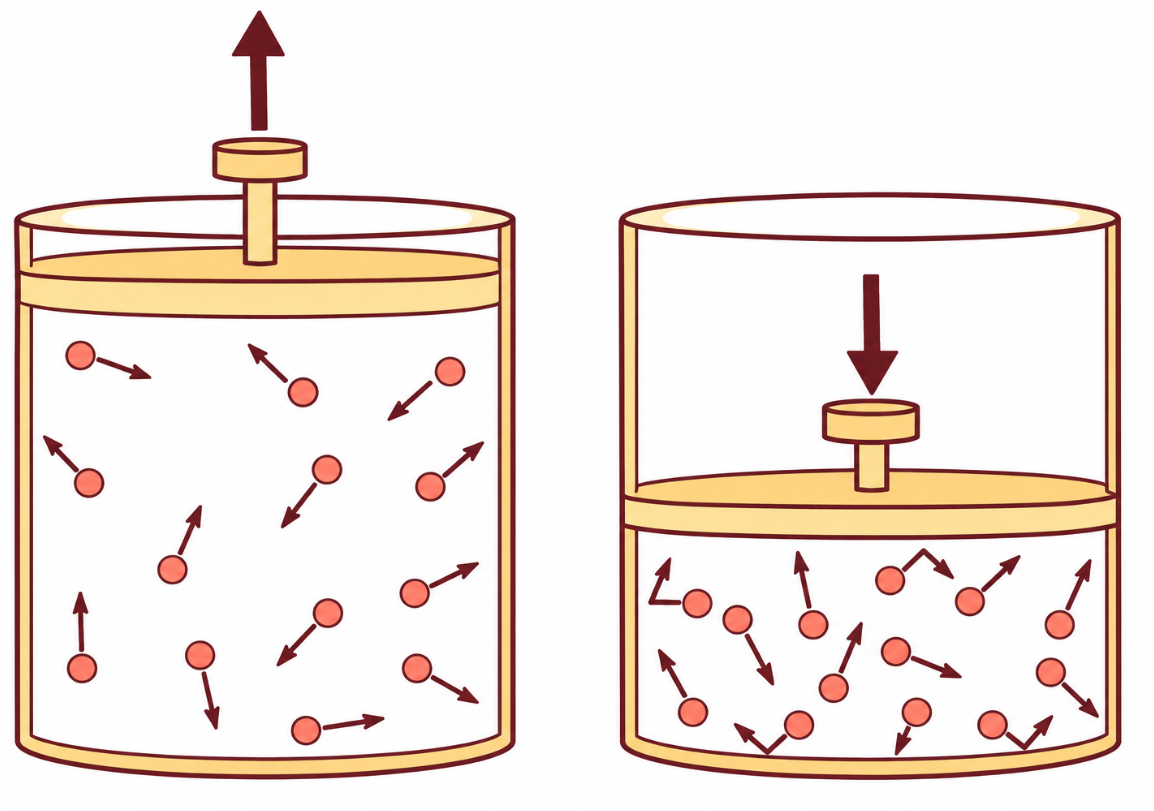
- Boyle's Law
- The principle that at constant temperature, gas pressure is inversely proportional to volume, expressed as P1V1 = P2V2
- Atmospheric Pressure
- The baseline pressure for breathing, about 760 mmHg at sea level, which decreases with altitude
- Intrapulmonary Pressure
- The pressure within the alveoli and airways, which falls below atmospheric during inspiration and rises above it during expiration
- Intrapleural Pressure
- The pressure within the pleural cavity, always negative during normal breathing, that keeps the lungs inflated against the chest wall
- Transpulmonary Pressure
- The difference between intrapulmonary and intrapleural pressure, the positive pressure that keeps the alveoli open
- Dalton's Law
- The principle that the total pressure of a gas mixture equals the sum of the partial pressures of each individual gas
- Partial Pressure
- The pressure a single gas would exert if it alone occupied the entire volume, which drives diffusion
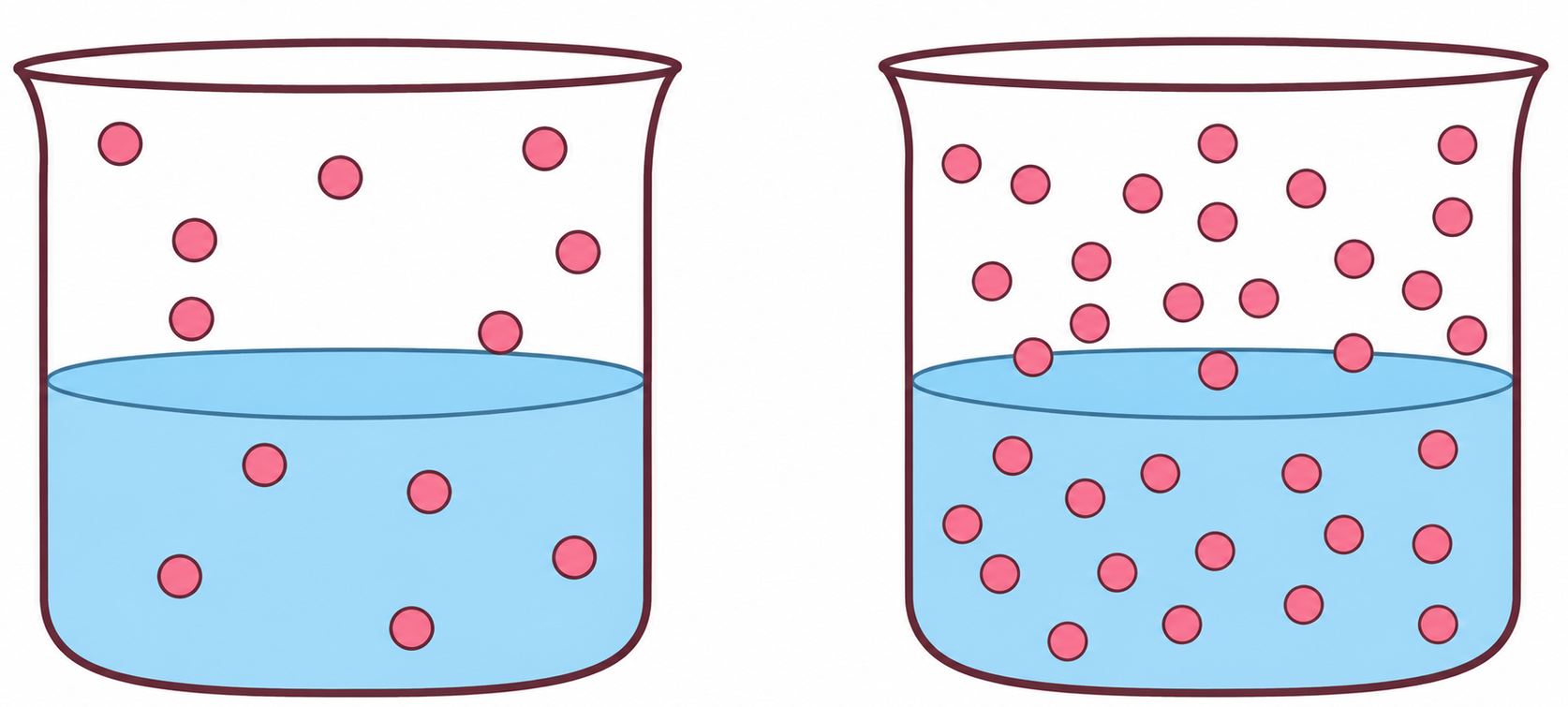
- Henry's Law
- The principle that the amount of gas dissolving in a liquid is proportional to its partial pressure and solubility
- Airflow
- The movement of air into and out of the lungs, described by F = change in pressure divided by resistance
- Airway Resistance
- The opposition to airflow, affected by airway diameter, lung volume, and air viscosity, and increased in conditions like asthma
- Compliance
- The lung's ability to stretch and expand; low compliance, as in pulmonary fibrosis, increases the work of breathing
- Surface Tension
- The inward pull created by fluid lining the alveoli that would cause collapse if not countered by surfactant
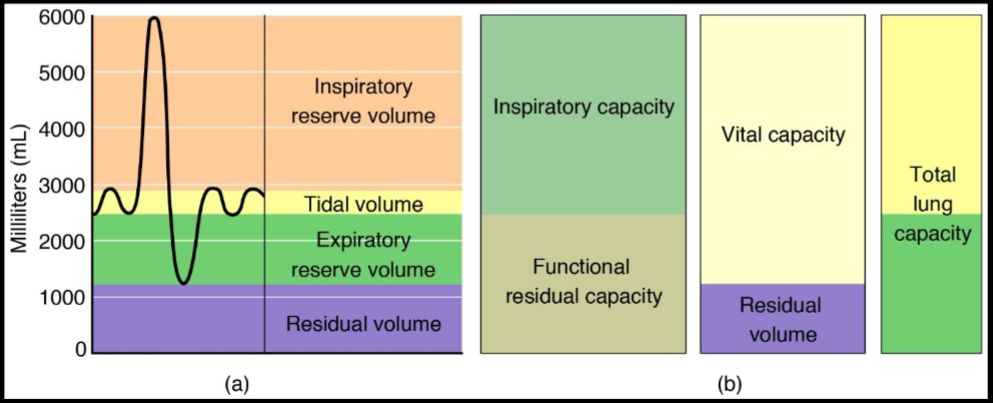
- Tidal Volume
- The amount of air inhaled or exhaled during a normal resting breath, about 500 milliliters in an adult
- Expiratory Reserve Volume
- The additional air that can be forcefully exhaled after a normal exhalation
- Inspiratory Reserve Volume
- The extra air that can be forcefully inhaled after a normal inhalation
- Residual Volume
- The air remaining in the lungs after a forceful exhalation, which prevents lung collapse
- Total Lung Capacity
- The maximum volume the lungs can hold, equal to tidal volume plus inspiratory reserve, expiratory reserve, and residual volumes
- Vital Capacity
- The total air that can be exhaled after a maximum inhalation
- Inspiratory Capacity
- The maximum air that can be inhaled after a normal exhalation, combining tidal volume and inspiratory reserve volume
- Functional Residual Capacity
- The air remaining in the lungs after a normal exhalation, consisting of expiratory reserve and residual volumes
- Anatomical Dead Space
- The air filling the conducting zones that does not participate in gas exchange, about 150 milliliters in an adult
- Alveolar Dead Space
- Alveoli that are ventilated but not perfused and therefore do not participate in gas exchange
- Total Dead Space
- The sum of anatomical and alveolar dead space, representing inspired air that does not contribute to gas exchange
- Minute Ventilation
- The volume of air moved per minute, calculated as tidal volume multiplied by respiratory rate
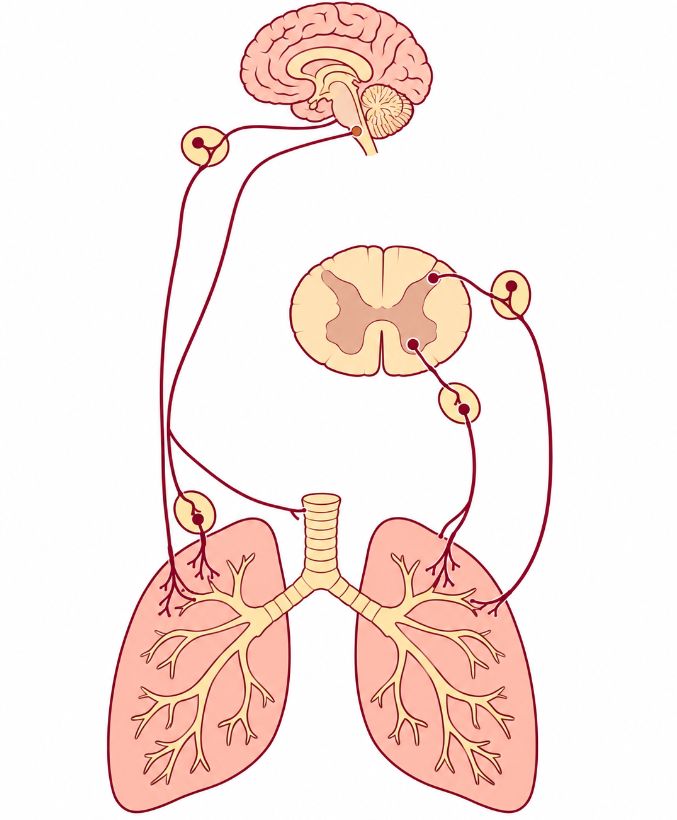
- Parasympathetic Nervous System
- The dominant autonomic control of the airways at rest, causing bronchoconstriction, increased mucus, and airway vasodilation
- Sympathetic Nervous System
- The autonomic division that promotes bronchodilation, reduced mucus, and faster mucociliary clearance, largely through circulating catecholamines
- Vagus Nerve
- Cranial nerve X, the parasympathetic nerve that supplies the airways and mediates the cough reflex
- Pulmonary Plexus
- The network of autonomic nerve fibers around the hilum where parasympathetic and sympathetic fibers intermingle before distributing through the lung
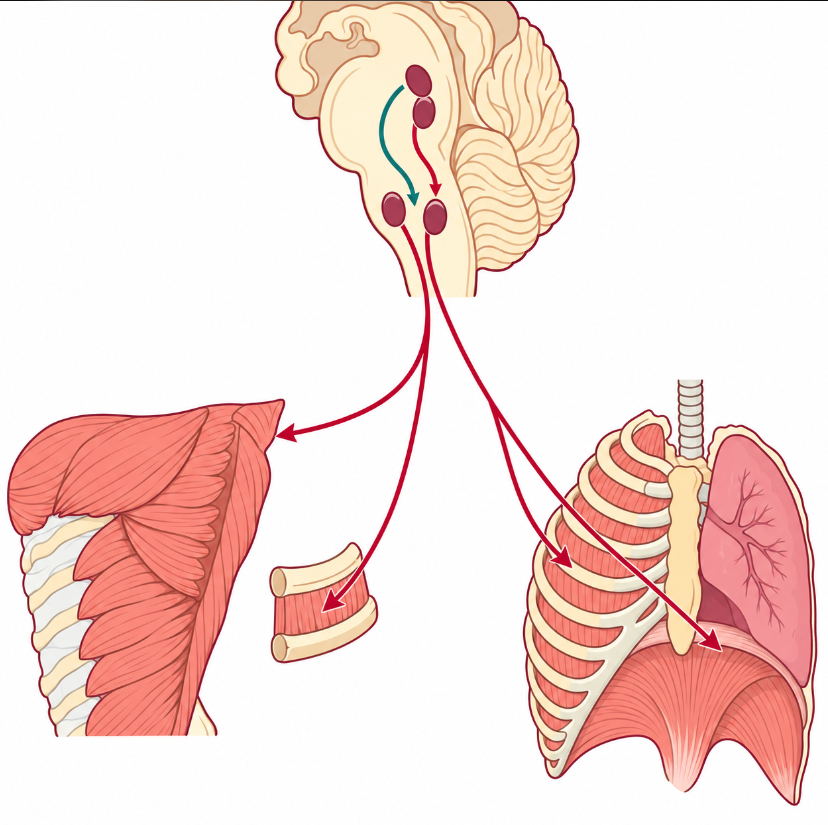
- Phrenic Nerve
- The nerve arising from spinal segments C3, C4, and C5 that controls the diaphragm and supplies sensation to the diaphragmatic pleura
- Hering-Breuer Reflex
- The reflex in which stretch receptors detect lung inflation and prevent over-inflation
- Stretch Receptors
- Receptors in airway smooth muscle that detect lung inflation
- Irritant Receptors
- Receptors in the airway epithelium that respond to noxious gases, smoke, dust, and cold air
- J Receptors
- Receptors in the alveolar walls near capillaries that respond to pulmonary edema, embolism, and inflammation
- Chemoreceptors
- Receptors in the medulla, carotid bodies, and aortic bodies that detect changes in carbon dioxide, oxygen, and pH to regulate breathing
- Apneustic Center
- A brainstem center that stimulates prolonged inspiration
- Pneumotaxic Center
- A brainstem center that limits inhalation and regulates smooth breathing
- Medullary Respiratory Center
- The center that controls the basic rhythm of breathing
- Ventral Respiratory Group
- The medullary group that manages inspiration and expiration, active during forceful breathing
- Dorsal Respiratory Group
- The medullary group that controls inspiration and adjusts rate based on blood gases
- Pontine Respiratory Group
- The group in the pons that modulates the rhythm of breathing
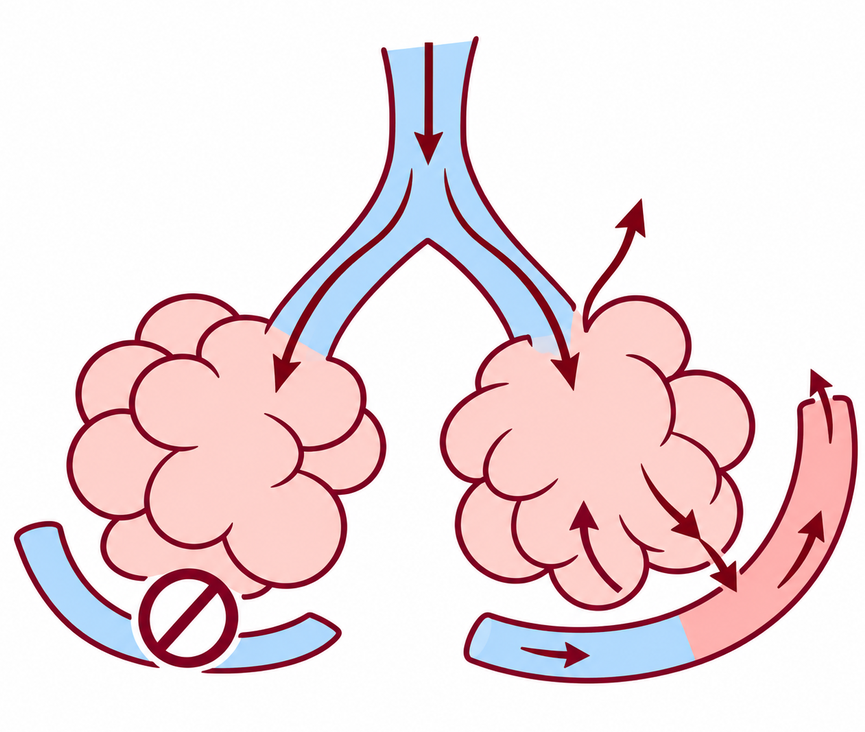
- Ventilation-Perfusion Ratio
- The relationship between air reaching the alveoli and blood flow in surrounding capillaries, ideally about 0.8
- V/Q Mismatch
- An imbalance between ventilation and perfusion that impairs gas exchange, high in pulmonary embolism and low in obstructive airway disease
- Shunting
- A condition in which blood bypasses ventilated alveoli, reducing oxygenation
- Hemoglobin
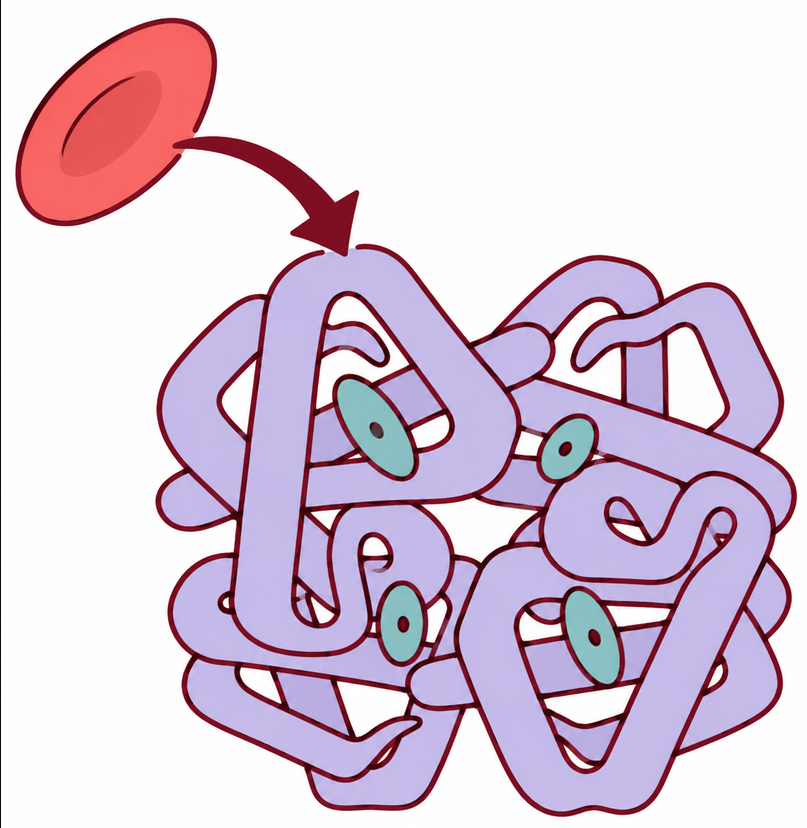
- The protein in red blood cells with four heme groups, each binding one oxygen molecule, that transports oxygen through the blood
- Oxyhemoglobin
- Hemoglobin bound with oxygen
- Carboxyhemoglobin
- Hemoglobin bound to carbon monoxide, which binds far more tightly than oxygen and impairs oxygen transport
- Carbaminohemoglobin
- Carbon dioxide bound to the protein structure of hemoglobin, carrying about 20 to 30 percent of blood carbon dioxide
- Bicarbonate Ions
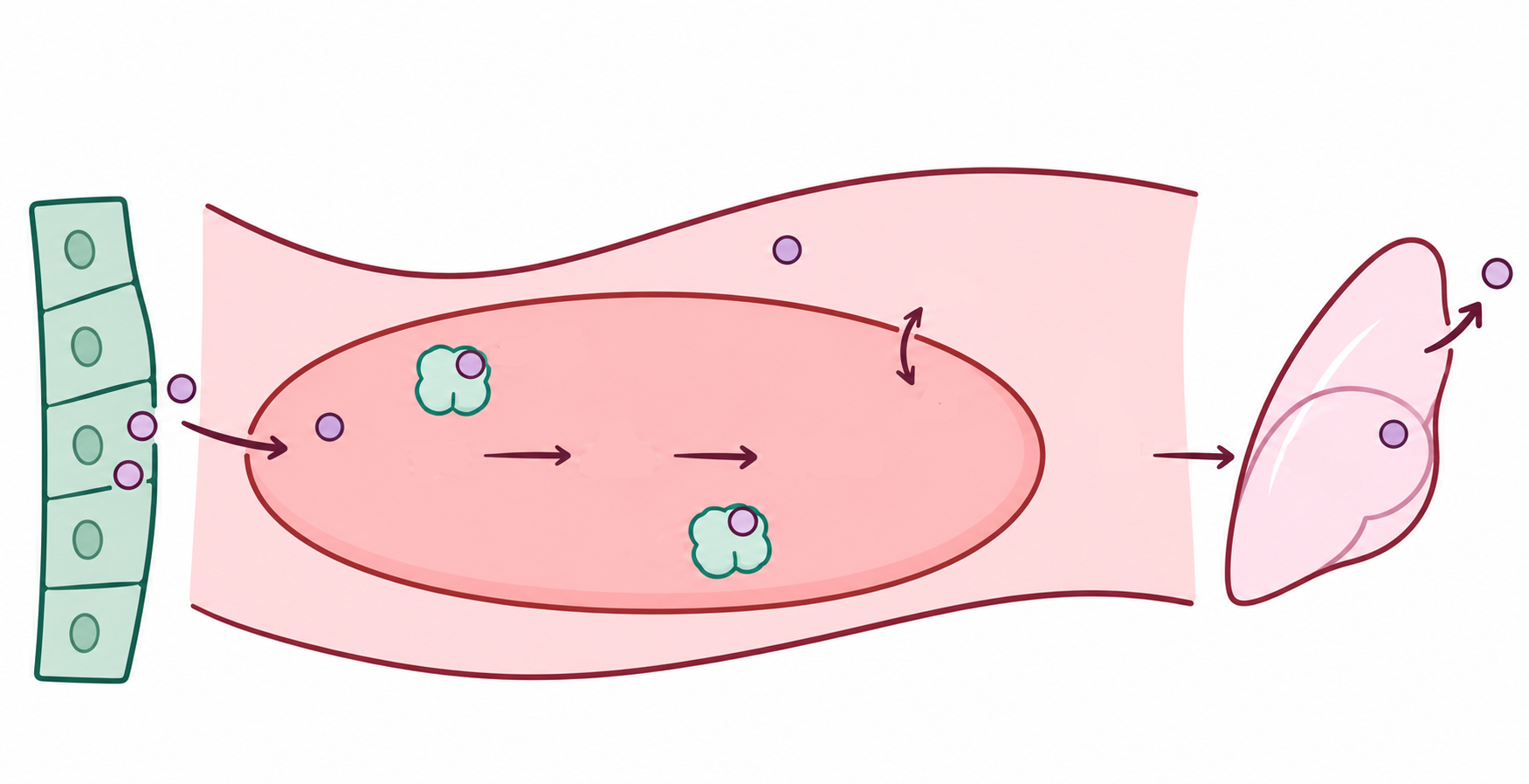
- The form carrying the majority of carbon dioxide, about 60 to 70 percent, produced when carbon dioxide combines with water in red blood cells
- Carbonic Anhydrase
- The enzyme that catalyzes the conversion of carbon dioxide and water into carbonic acid within red blood cells
- Haldane Effect
- The tendency of deoxygenated hemoglobin to bind carbon dioxide more readily, aiding carbon dioxide pickup in tissues and release in the lungs
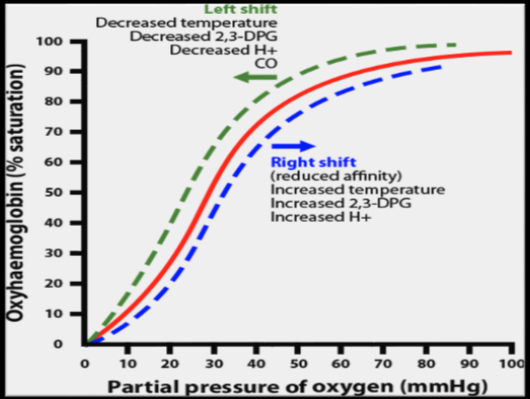
- Oxygen-Hemoglobin Dissociation Curve
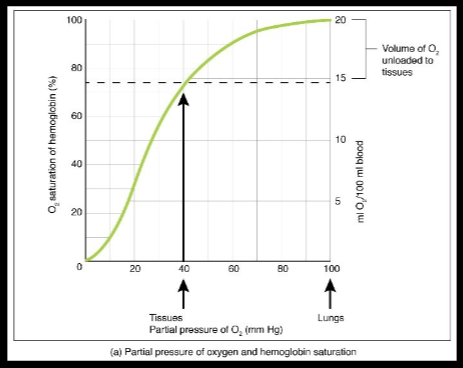
- The curve showing the relationship between oxygen partial pressure and hemoglobin saturation
- Left Shift
- A shift of the dissociation curve toward increased oxygen affinity, caused by decreased carbon dioxide, increased pH, lower temperature, and reduced 2,3-BPG
- Right Shift
- A shift of the dissociation curve toward decreased oxygen affinity, favoring oxygen release, caused by lower pH, higher carbon dioxide, increased temperature, and elevated 2,3-BPG
- 2,3-BPG
- A substance produced by red blood cells that binds hemoglobin and lowers its oxygen affinity, rising in chronic hypoxia, altitude, and anemia